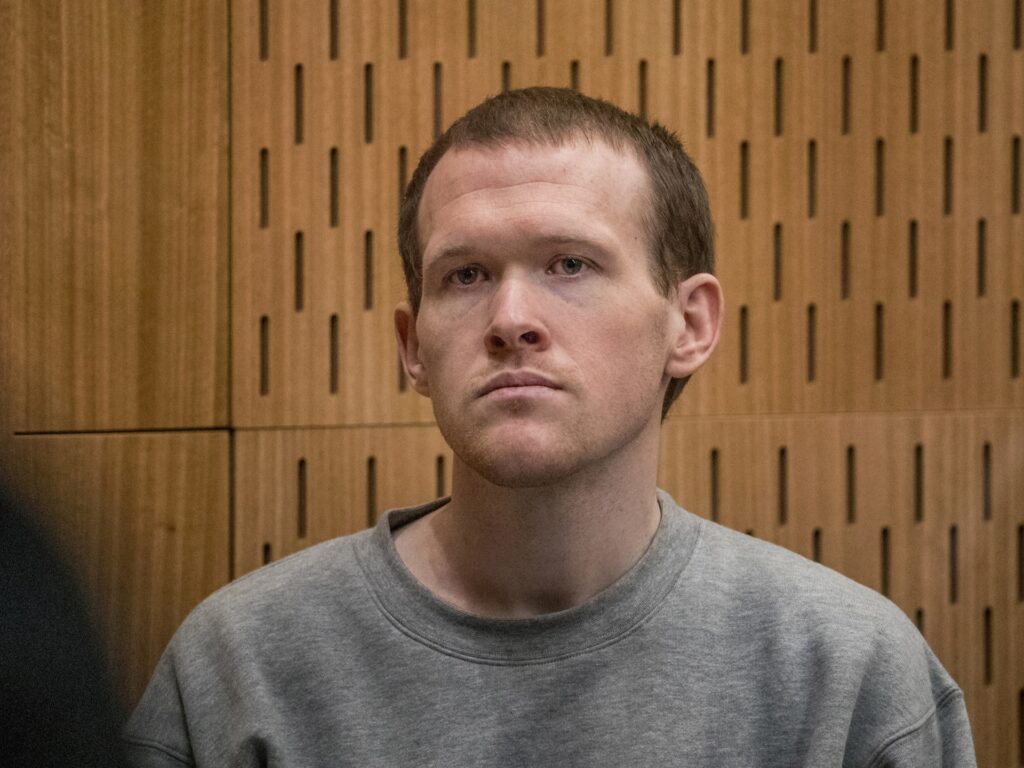
Brenton Tarrant shot dead 51 Muslim worshippers, including children, at two Christchurch mosques in 2019.
Australian white supremacist killer Brenton Tarrant has lost an appeal to overturn his conviction and sentence for shooting dead 51 people at two New Zealand mosques in 2019, court documents show.
New Zealand’s Court of Appeal denied Tarrant’s appeal on Thursday, ruling that his attempt to overturn his guilty plea for the country’s deadliest mass shooting was “utterly devoid of merit”.
Recommended Stories
list of 4 items
- list 1 of 4Israel seizes Global Sumud Flotilla boats 1,000km away from Gaza
- list 2 of 4US indicts Sinaloa governor, 9 others over Mexican drug cartel links
- list 3 of 4Oil prices soar on fears of long supply disruption, US siege of Iran ports
- list 4 of 4Pro-government rally in Tehran demands end to US threats
end of list
The 35-year-old had admitted to carrying out the mass shooting before being sentenced to life in prison in August 2020.
Tarrant lodged an appeal in February, claiming that “torturous and inhumane” detention conditions during his trial made him incapable of making rational decisions when he pleaded guilty to 51 charges of murder, 40 counts of attempted murder and one charge of committing a terrorist attack over the 2019 mass shooting.
Tarrant, who is serving life in prison without parole for killing Muslim worshippers at the Al Noor mosque and Linwood Islamic Centre in Christchurch on March 15, 2019, livestreamed his attack for 17 minutes.
He had also published an online manifesto before carrying out the atrocity, which targeted children, women and the elderly.
Local media outlet The Post reported that the three-judge panel, in their ruling released on Thursday, said that they had taken two lines of enquiry, one on Tarrant’s state of mind at the time of his guilty plea and whether his pleas were voluntary.
The judges said the court did “not accept Mr Tarrant’s evidence about his mental state”.
“There were inconsistencies in Mr Tarrant’s own evidence, and his evidence is at odds with the detailed observations of prison authorities and the assessments of mental health professionals at the time of him entering his pleas,” the judges said.
The judges found that Tarrant’s guilty pleas were voluntary, and “he was not coerced or pressured in any way to plead guilty”.
“The evidence overwhelmingly demonstrates that he was not suffering any significant psychological impacts as a result of his prison conditions at the time he pleaded guilty,” the court said.
“The facts concerning Mr Tarrant’s offending are beyond dispute. He has not identified any arguable defence, or indeed any defence known to the law.”
Lawyers representing the survivors and families of Tarrant’s victims told national broadcaster RNZ that the court’s decision had been a “huge relief”.
“The families, and frankly all of us, will be spared the trauma of reliving the 15th of March all over again in a trial,” they said.
“It is a huge relief that the difficult and often unsupported journey families are on will not now be added to by the great burden of a new trial. It would have been unimaginably traumatic.”