As the Israeli cabinet approves 13 new settlements, a severe spike in demolitions and settler attacks continues to devastate Palestinian communities.
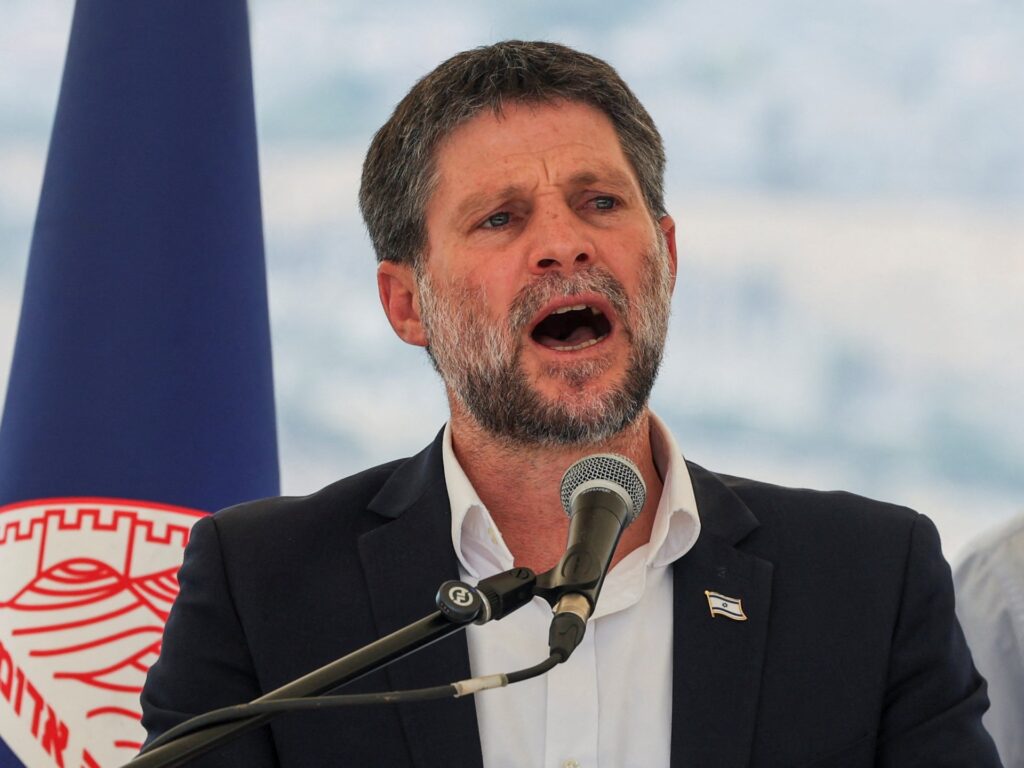
Israeli Finance Minister Bezalel Smotrich has declared that Israel has launched a “revolution in settlement” expansion, which he says will see illegal outposts extended beyond the occupied West Bank into the Negev and Galilee.
The far-right minister’s post on the social media platform X follows the Israeli cabinet’s recent approval to establish 13 new settlements in the central occupied West Bank.
Those settlements, considered illegal under international law, will be situated in strategically critical parts of the West Bank, which Israeli officials say will help entrench their control over the occupied Palestinian territory.
The project focuses on strategic corridors along Route 60—the central north-south artery linking major Palestinian cities such as Nablus, Ramallah and Bethlehem—as well as territory extending eastward towards the Jordan Valley.
Palestinian officials have warned that the expansion will further isolate occupied East Jerusalem, long considered the capital of a future Palestinian state, from the rest of the West Bank, undermining any prospect of a two-state solution.
There has been an aggressive push to increase settlements since 2022 when Prime Minister Benjamin Netanyahu formed the most far-right government in Israel’s history, which includes ministers who are leading figures in the settler movement. That has resulted in an unprecedented surge in state funding for settlement expansion, according to the Palestinian Forum for Israeli Studies (MADAR).
After averaging approximately eight outposts annually between 2012 and 2022, the number increased to 32 in 2023. The trend accelerated in 2024 with 62 new outposts established, backed by 75 million shekels ($20m) in government funding. In 2025, expansion intensified again to a record number of 86 new outposts across the West Bank.
An estimated 500,000 Israeli settlers live in settlements in the occupied West Bank, as well as 250,000 in occupied East Jerusalem, which are considered illegal under international law.
Settlement expansion has coincided with a brutal campaign of violence by settlers against Palestinians. A United Nations inquiry recently reported a 130 percent surge in Israeli settler attacks on Palestinian villages and agricultural land in the West Bank since 2023.
On Friday, settlers destroyed the main electricity line in the village of al-Maniya, cutting power to the community and provoking widespread panic.
On the same day, settlers vandalised greenhouses near Tulkarem, by tearing protective nets and destroying local family businesses. In the northeast of Jerusalem, settlers seized control of the Ein Rawabi spring, which dozens of Bedouin families rely on to water their 1,300 sheep.
Palestinians are also being pushed out of their homes, as seen in Jalud village during the same period. Overall, it suggests a systematic and coordinated campaign by settlers to destroy infrastructure and force Palestinians from their homes.
In May alone, the Colonization and Wall Resistance Commission (CWRC) documented 1,659 attacks by Israeli forces and settlers in the West Bank, with settlers directly responsible for 551 of those incidents. The violence was concentrated in Ramallah, Nablus and Hebron, resulting in the destruction, uprooting or burning of 7,222 trees, including over 3,300 olive trees which are a vital source of income for many Palestinian families.
The Israeli state has also ramped up the demolition of Palestinian homes with 70 demolition operations carried out in May, destroying 155 Palestinian structures across the occupied West Bank and Jerusalem. The Jerusalem governorate suffered most, with 50 structures demolished in a single month.
Since October 8, 2023 – and coinciding with the genocidal war in Gaza – the combined violence of Israeli forces and settlers in the occupied West Bank has resulted in the killing of 1,175 Palestinians and injuries to 12,919. At the same time, about 24,000 Palestinians have been arrested and 33,000 displaced from their homes.
Mohammad Mansour has contributed to this report.